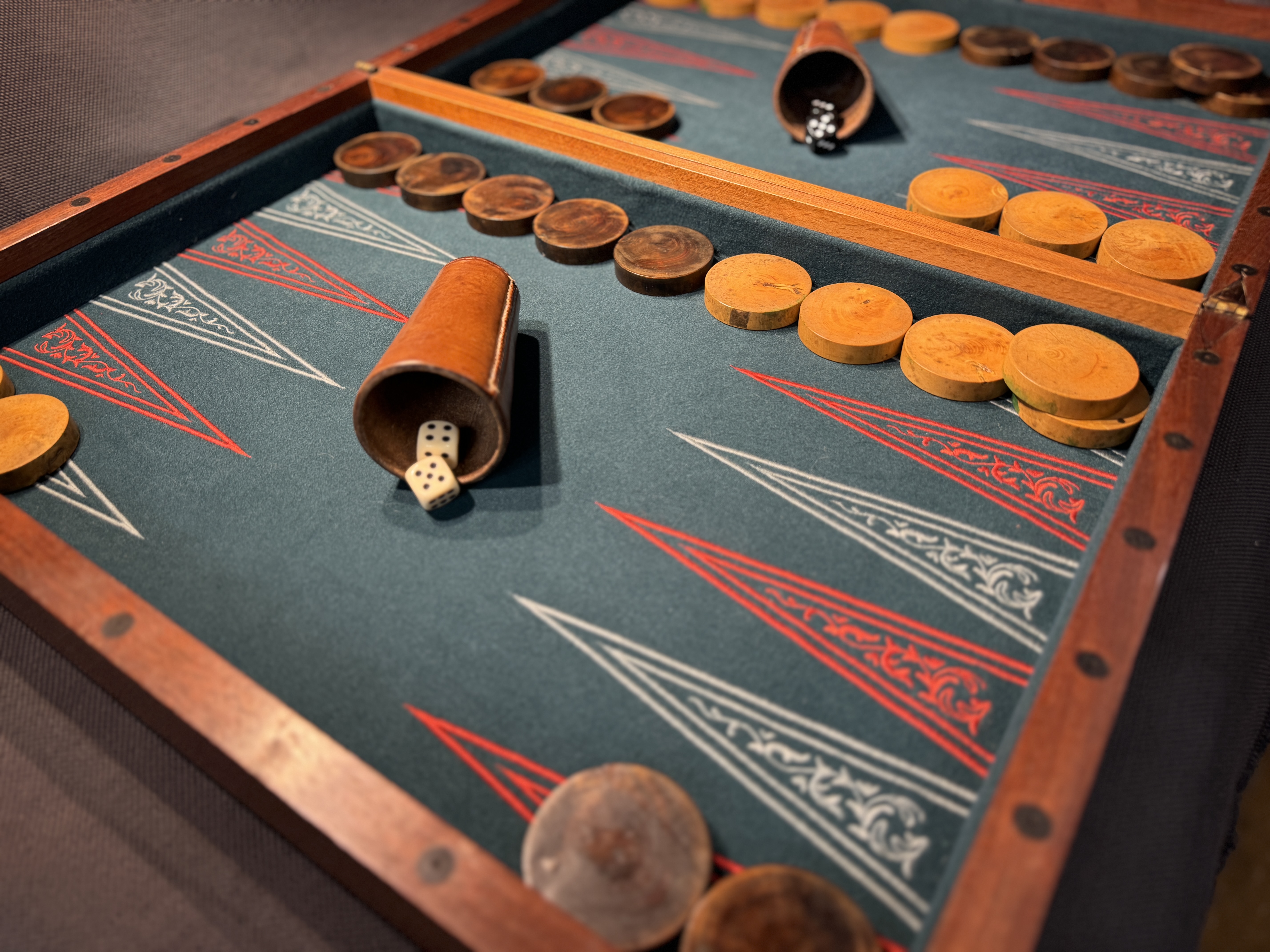
How to Identify and Choose an Antique Backgammon Board
If you enjoy playing backgammon, chances are that at some point you've searched for a backgammon board, perhaps as a wedding or birthday present, perhaps as a gift to yourself. Maybe you were looking for a vintage board, or perhaps an antique one. Although there is no strict definition today, 'Vintage' was traditionally considered to be over 20 years old, and 'Antique' over 100 years old - but these days this definition is followed by very few sellers. Try typing 'antitique backgammon' into an internet search engine and you'll see what I mean. You'll get literally thousands of boards, most of which were made yesterday (quite often in Armenia for some reason). Personally I find this infuriating - and it happens because unscrupulous vendors of newly made boards use words like 'antique' and 'vintage' in their keywords - and Google picks up on them.
So, how to you tell whether a board is 'the real thing' or not ? Whether you're out in the flea markets and garage sales, roaming the antique shops and auction houses, or cruising the internet, here are a few tips :
1. Price. Seems obvious, but as a general rule if it's cheap and it looks to be in reasonable shape - then it's probably not an antique.
2. If he or she is an internet vendor, does he have customer reviews visible ? If he does, read as many as you can to get a feel for what his customers say. If he doesn't, then there's probably a reason for that. (Sadly, this is not infallible as a means of assessment since some sellers are quite adept at writing their own reviews ! Always prefer vendors with verified reviews if possible).
3. Look very carefully at the photos of boards if you're on the internet - zoom right in if you can. Do they actually look old ? Look very carefully at the closing mechanisms or clasps - these are probably the greatest give-away. Modern, shiny clasps or hinges - and you're almost certainly looking at recently made board. Or at best a badly restored one.
4. Are there any signs of wear and blemishes ? Antiques boards have lived. And, like us, they carry the signs of the lives they have lived. If you can't see blemishes, odds are it's either been 'over restored' (so lost its soul in my view) or it's modern.
5. What wood it is made from ? This is an important point. If in doubt ask the vendor. Higher quality antique boards are usually made from walnut (the great majority), oak, mahogany, or occasionally rosewood. The lower quality boards tended to be made from pine - pine has its own charm and is considerably lighter, but is a less noble material. Telling the different woods apart can be tricky even for an expert, if in doubt a reasonable rule of thumb is, 'The heavier the better'.
6. What do the counters, dice and dice cups look like ? If they look like they're made from modern materials that's a red flag.
So, now perhaps you've found a few backgammon boards that you believe might be real antiques. What are the common flaws to look out for ? My speciality is French backgammon boards, so I'm going to take a few examples of common flaws in these games - but most of which will also be applicable to English, American, or other European antique boards.
A. Most important. Look very carefully at any pictures of the board closed (or ask for some if the vendor isn't showing them). Look for any signs of warping - usually visible as variations the slight gap between the two halves of the board when closed. This is particularly crucial on the hinged side.
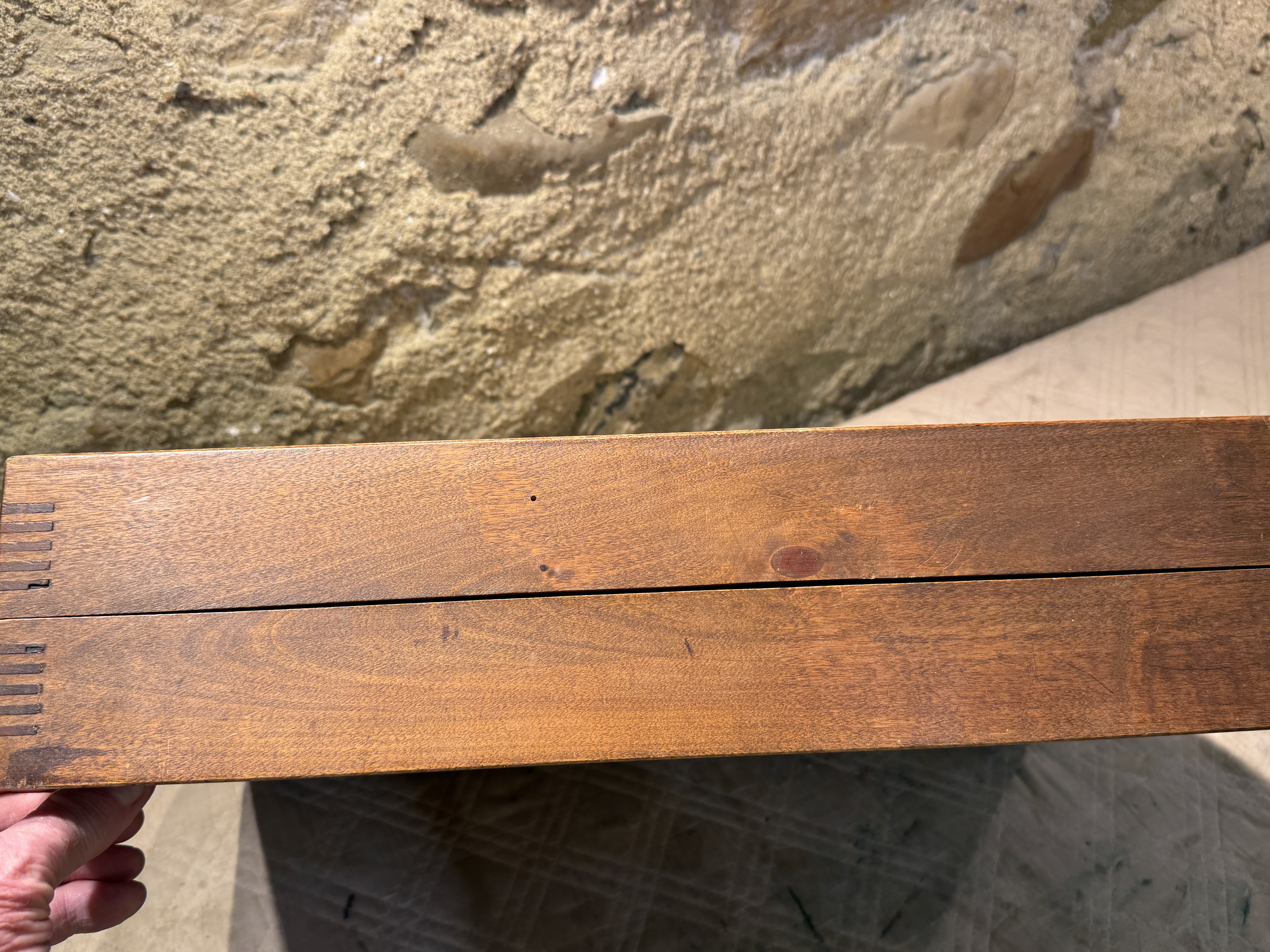
Any variation in the size of the gap is an indicator of warping. Severe warping affects the structural integrity of the board and is very hard indeed to correct.
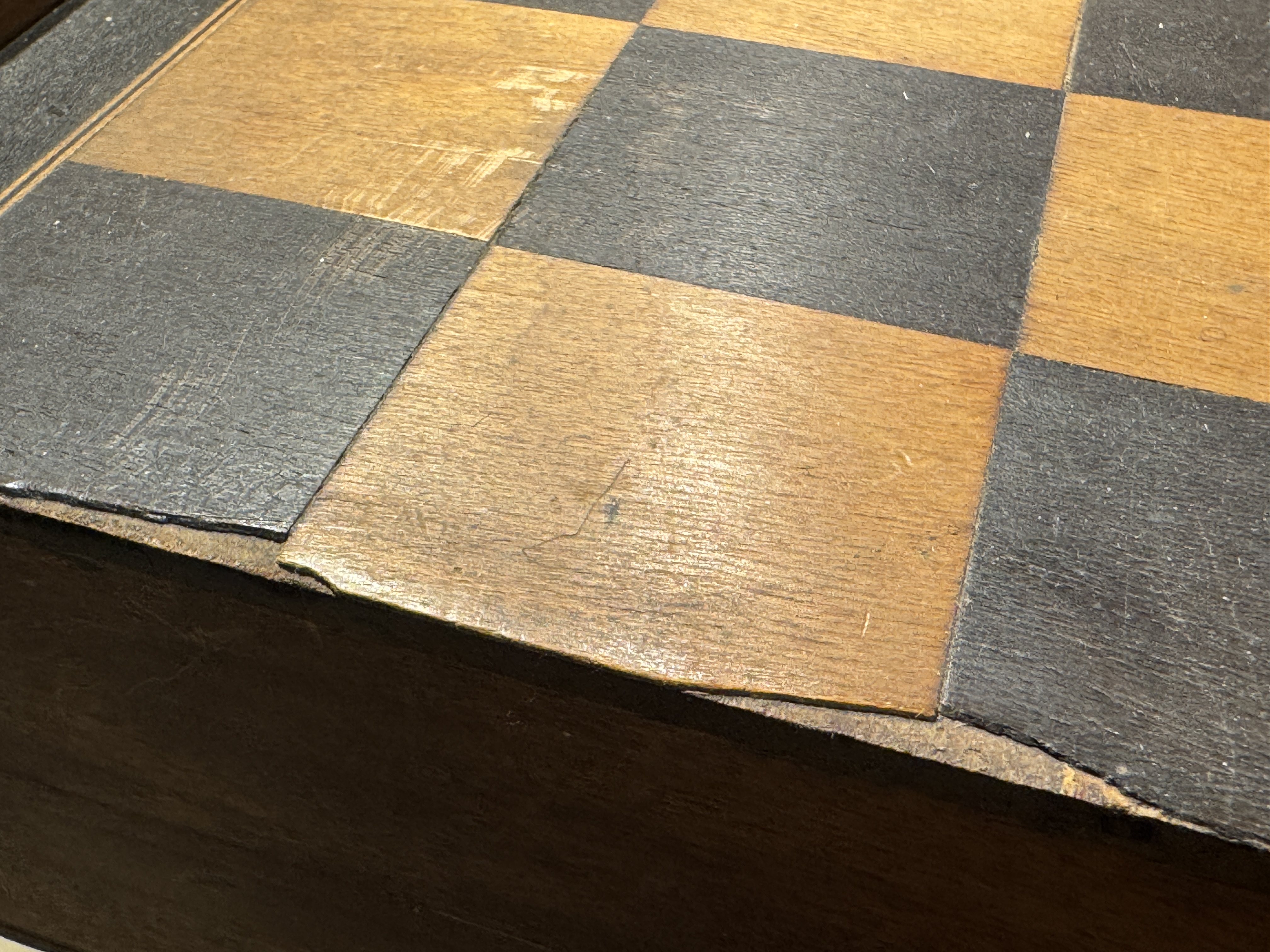
B. If the board has marquetry (inlaid wood) playing surfaces then pay particular attention to any signs of missing bits, or 'lifting', of the marquetry. Replacing and repairing marquetry is a specialist job.
C. If the backgammon playing surface is the original antique green baize, then there is an 80% chance that it has moth damage. A small amount of moth damage is not serious, especially if it's confined to the corners of the baize,
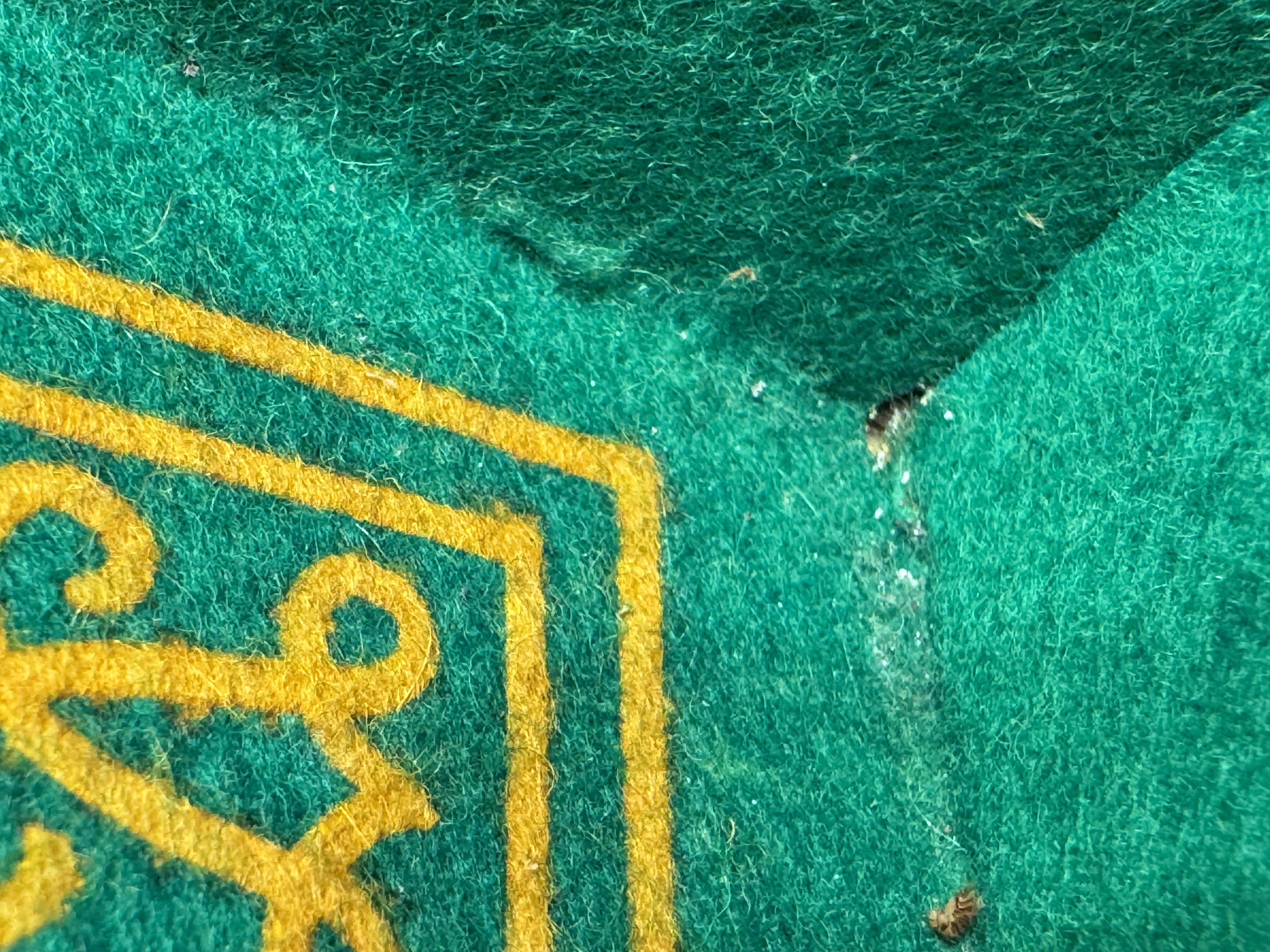
as it won't affect play and isn't very visible. (Do make sure that the moths have gone though).
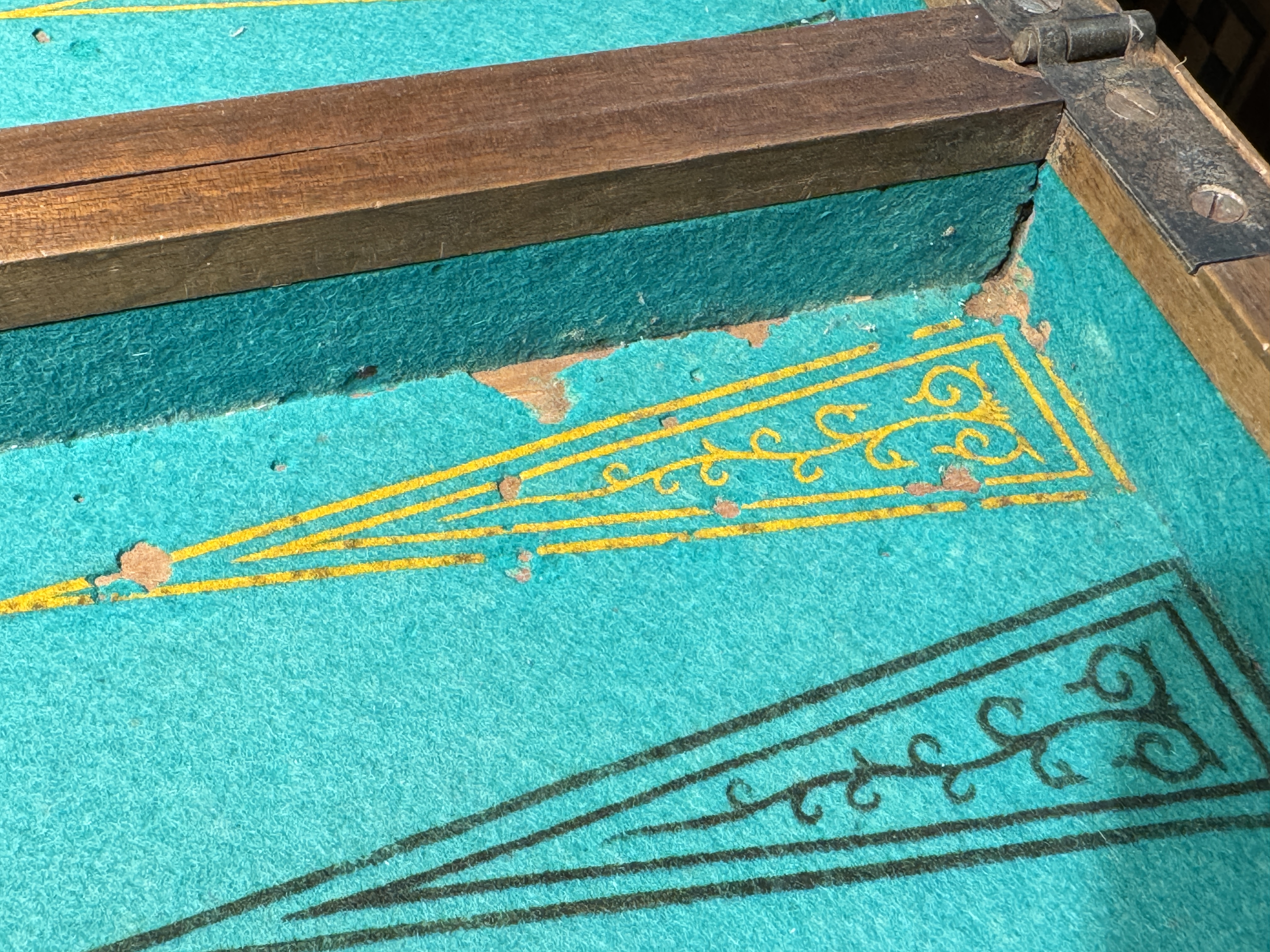
If the moth damage is significant then the baize will need to be replaced - if the board is a very special one (a really cool barn find, or a family board with lots of emotional equity) then this is worth doing. (I have done this for a few clients but it is quite a lot of work). Finally, if there's no moth damage at all to an antique board, then it's very likely that the baize has been replaced at some point, probably with a synthetic material - or that the board is more recent than you think.
D. Does the baize show any signs of 'pilling', fluff or loose fabric across the surface of the baize ? If so, it's very likely that someone has tried to clean the baize with a water-based cleaning solution. Sadly, this is irreversible - and the baize will need to be replaced, which is a fairly serious operation.
E. Are all the fixtures and accessories original, present, and functional ? Closing latches, hooks, eyes, hinges, dice cups, ... If not, they can be replaced with period parts, but hunting them down can be tricky. Missing wooden hinge covers in particular (of which there should be four) is a very common issue with vintage and antique boards.
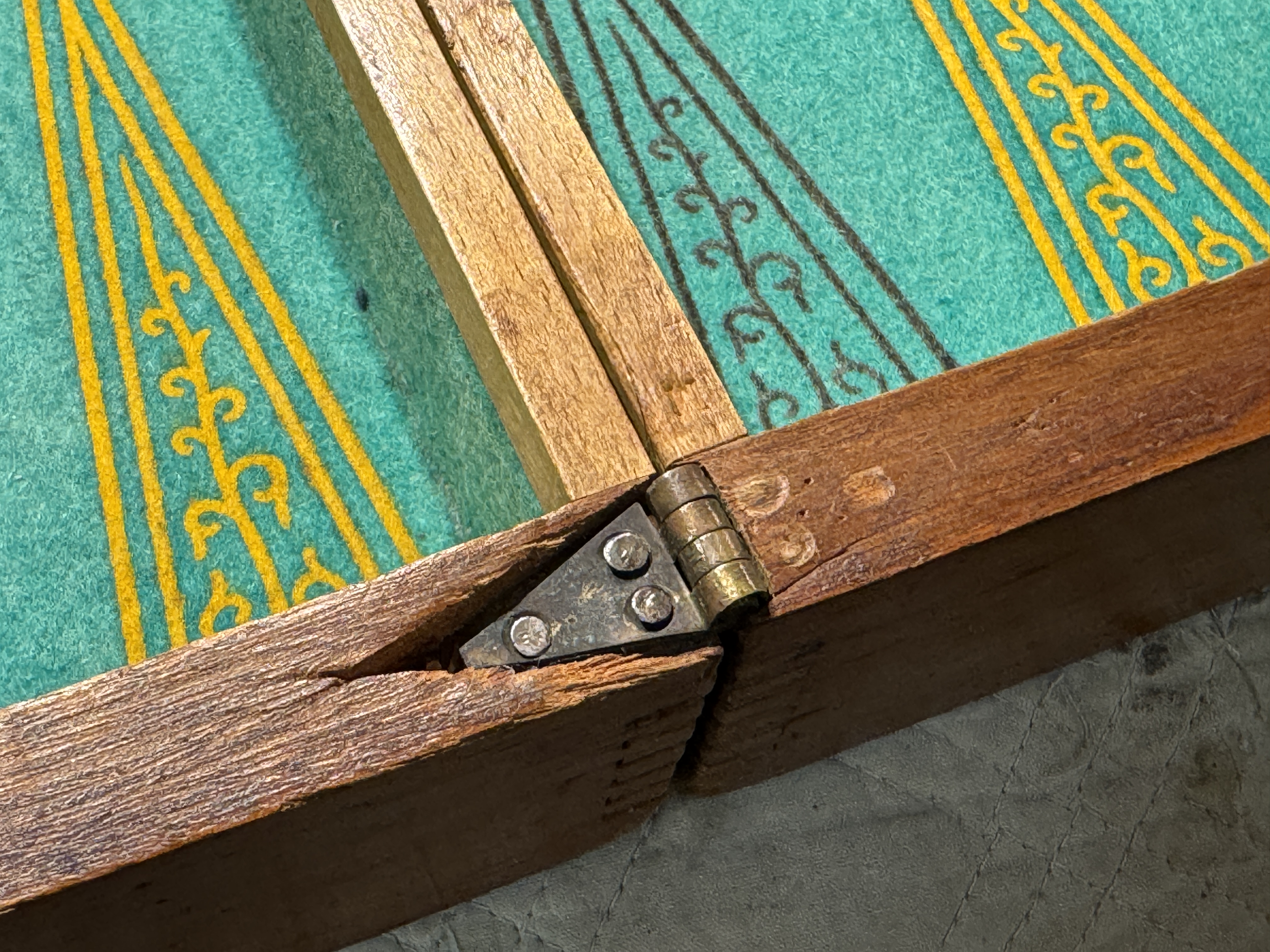
Again, this is reparable but it's a tricky operation. (If needed I can do most common repairs and I have a large stock of age-appropriate parts).
F. Does the backgammon board have a baize or cloth playing surface ? If so, does it have upholstered 'bumpers' ? Bumpers are inner sides of board. The finer quality boards have bumpers that are also covered in baize - on the the lower quality boards they were left as plain wood.
G. I know that this may sound obvious, but take the time to check whether all the playing pieces are present (2X15) - and that they are all of the same wood, same thickness, same diameter and have the same patina. Matching missing playing pieces with identical period pieces is very tricky. (I have literally thousands, so if you do find yourself in this situation I can almost certainly help).
H. Finally, a special mention for woodworm.
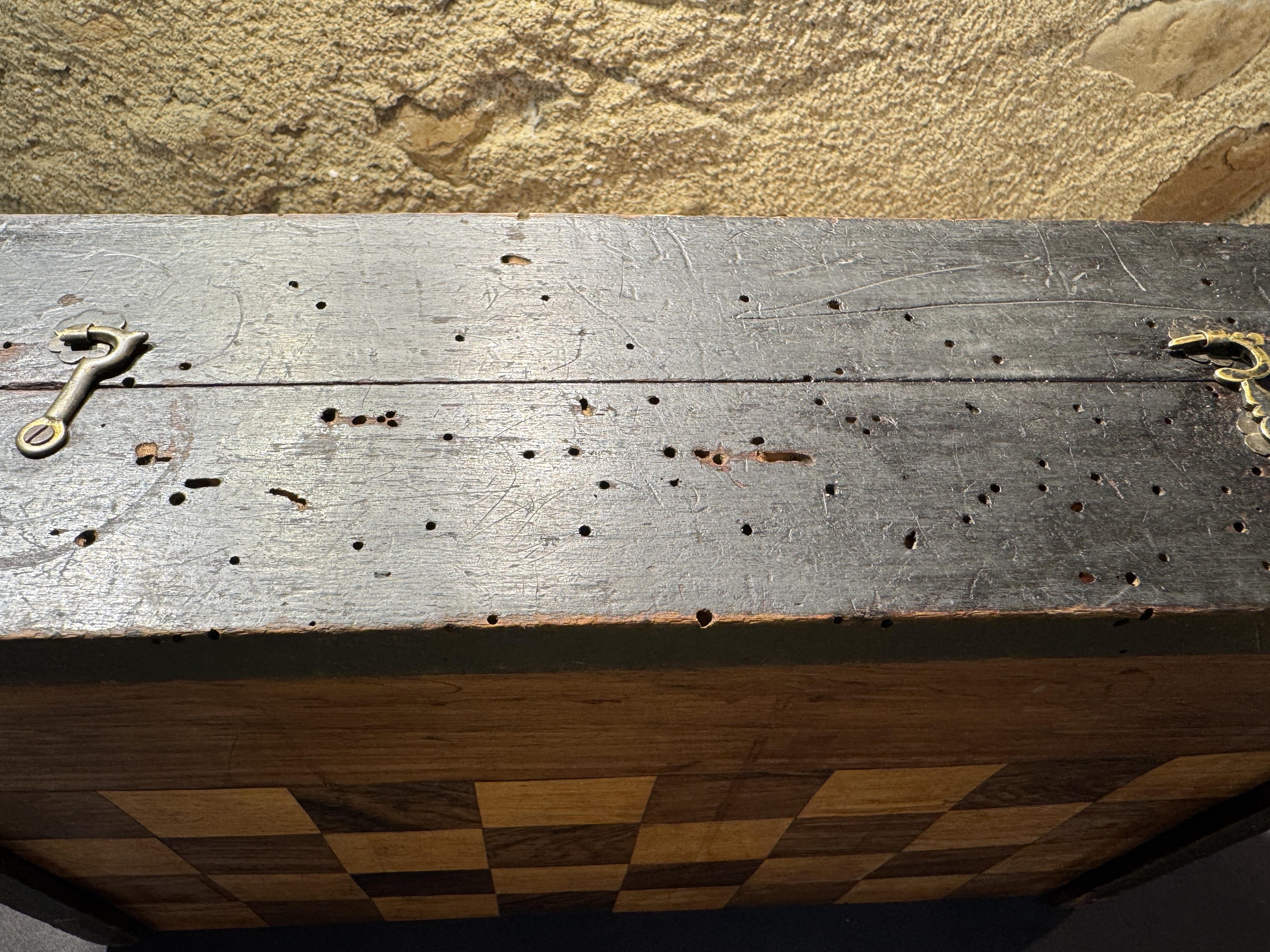
Woodworms seem to like backgammon boards. Be very wary if you see woodworm holes in the wood, even if they appear to be old. The trick for testing for active woodworm is to spread something like a dark coloured T-shirt or sheet onto a solid surface (table, bench, or just the floor). Then, holding the board with the side with the woodworm holes downwards towards the dark surface, bring the flat of the surface down fairly hard onto the dark surface. Repeat this for each face of the board that has any worm holes in it. If the shock of the impact dislodges any woodworm dust from the holes (clearly visible against the dark surface), then there are certainly active woodworm present.
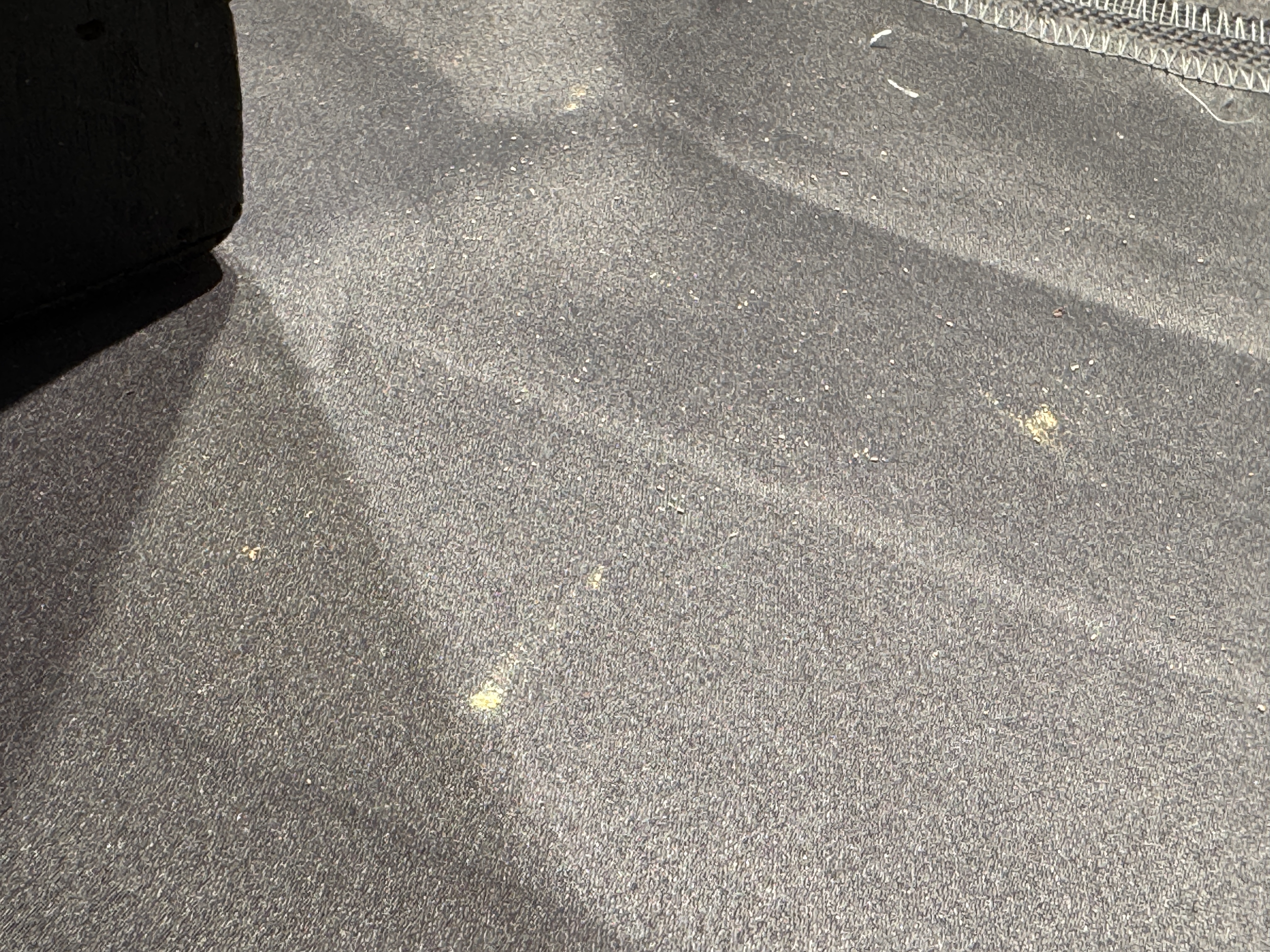
Modern anti-woodworm treatments have been drastically downgraded for environmental reasons, and I know from experience how difficult it is nowadays to eradicate woodworm using these products. I have to restort to using a medical syringe with a long needle to inject the product deep into every single hole on a board - and I repeat this three or four times. It takes hours. Frankly, these days if I see woodworm holes on a board, unless the board is something incredibly special that I really, really want - I walk by.
So there you have it. An introduction to the basics of selection. Thank you for your interest. I hope that this blog has given you some insights into what to look for - and perhaps more importantly what to avoid, when buying a vintage or antique backgammon board. Enjoy your searches, and if I can be of any help please don't hesitate to reach out to me via the messaging system here on my website. David
Related Articles
No related articles found.